
Search for advice on getting more Google reviews and you will find a great deal of it recommending things that became illegal in the United States on 21 October 2024.
That is the day the FTC's Consumer Reviews and Testimonials Rule took effect. It carries civil penalties of up to $53,088 per violation, adjusted annually, and the Commission is enforcing it: it sent warning letters to ten companies in December 2025.
Per violation, in a context where each review could count as one, is the part worth sitting with.
What is now prohibited
Four things, in plain terms.
Fake reviews, including AI-generated ones. Creating, buying or distributing reviews from people who did not have the experience. The rule names AI explicitly, which closes the loophole a lot of cheap reputation services were operating in.
Undisclosed insider reviews. Reviews written by officers, managers or employees must clearly disclose the connection. Asking your staff to leave five-star reviews for the practice they work at, without disclosure, is a violation. So is asking their families, where you knew about the relationship.
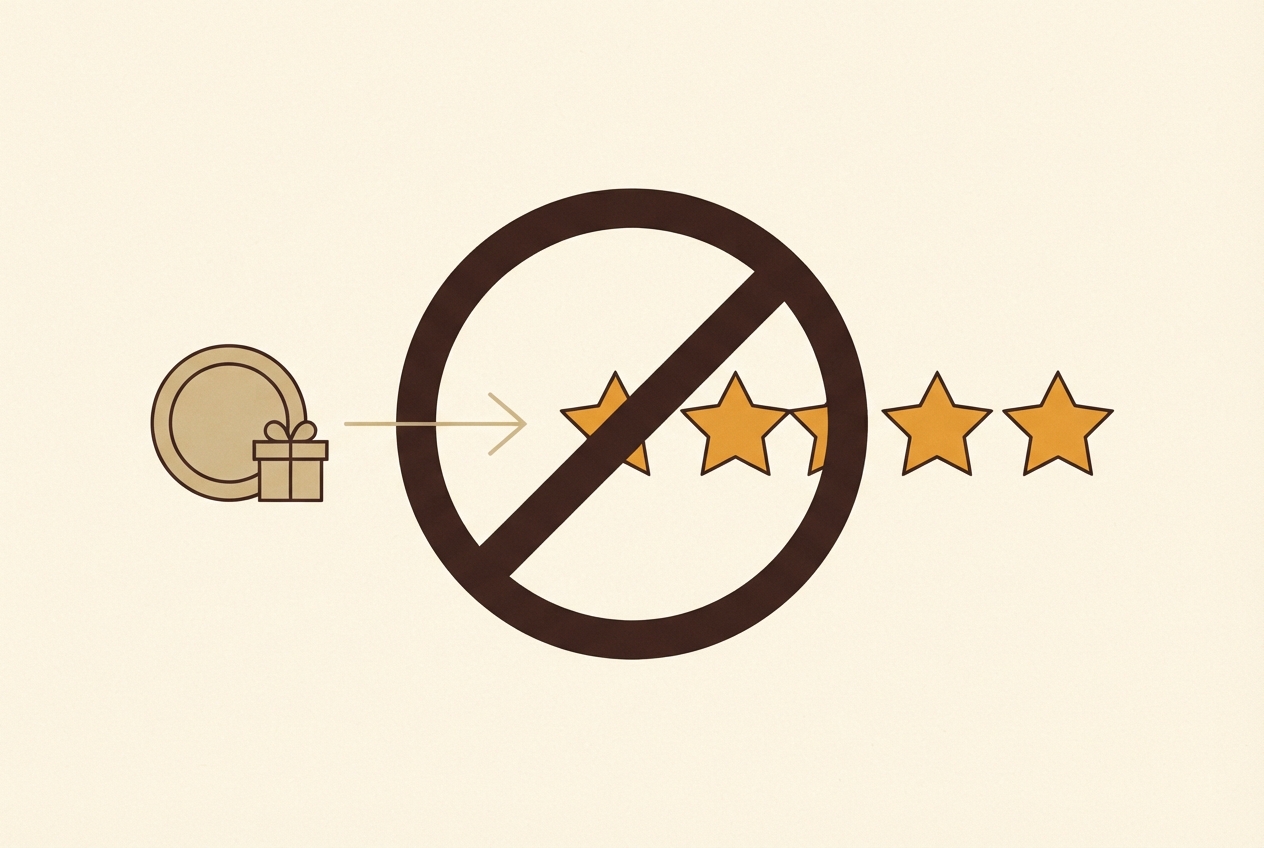
Incentives tied to sentiment. You may not offer compensation conditioned on a review expressing a particular sentiment, positive or negative, and the rule covers implied conditions as well as stated ones. "Leave us a five-star review and get $10 off" is squarely prohibited. So, in substance, is "leave us a review and get $10 off" if everything around it makes clear which kind of review is expected.
Suppressing negative reviews. Using unfounded or groundless legal threats, physical threats, intimidation or certain false public accusations to prevent or remove a negative review. Intimidation is not limited to physical threats and can extend to abusive communications and character assassination. It is also a violation to display reviews in a way that misrepresents them as all or most of those submitted when negative ones have been suppressed.
Review gating: the tactic that quietly died
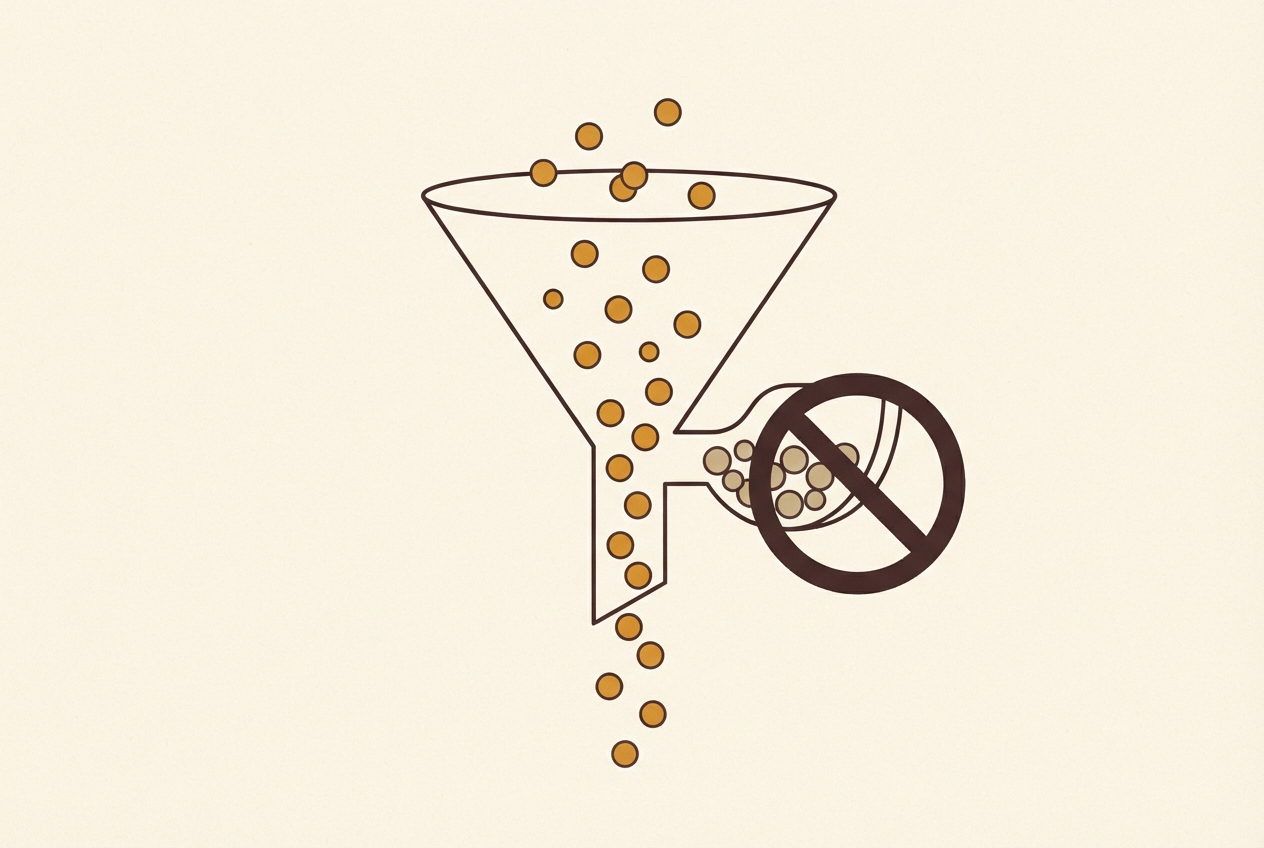
Review gating is the practice of surveying customers first, then routing the happy ones to Google and the unhappy ones to a private feedback form.
It was sold as best practice for years. It is prohibited by Google's own policies and it sits squarely in the territory the FTC rule addresses on suppression and misrepresentation. Plenty of reputation-management software still ships with it switched on by default.
Go and check what your review software actually does. If it asks "how was your experience?" and shows the Google link only to people who answer positively, that is gating, and you probably did not know you were doing it.
What still works, and works better
The good news is that the compliant tactics outperform the prohibited ones, because the prohibited ones produce reviews that read as fake to humans and to answer engines alike.
Ask everyone, at the right moment. The single largest determinant of review volume is whether you actually ask, and when. Immediately after the work is finished and the customer is visibly satisfied is worth ten times an email sent a fortnight later.
Ask in person, follow up by text. In-person requests convert several times better than email. A verbal ask followed by a text containing the direct link is the highest-yield combination available.
Remove every step you can. Use your Google review short link. Not the profile page, not "search for us on Google". One tap.
Make it a routine, not a campaign. Twenty reviews arriving in one week after three quiet years is a pattern that looks manufactured. Steady arrival is both more credible and more useful for ranking, since recency counts.
Ask for specifics, without conditioning anything. You may not offer anything in exchange for sentiment, but you may absolutely say: "if you have a moment, it helps if you mention what we did and roughly where you are." That is not compensation, it is guidance, and detailed reviews mentioning services and locations are the ones answer engines quote when describing you.
Train the person who is actually there. Whoever finishes the job or hands back the keys is the one who can ask. Owners often build elaborate automation while never asking the technician to say one sentence.
Two constraints worth knowing
Healthcare has extra limits. HIPAA binds both requests and replies. A generic "we hope you had a good experience" is fine, while a request referencing someone's treatment is not, and replies cannot confirm that a reviewer was a patient. That is covered properly in why your practice is not showing up on Google Maps.
Some professions cannot solicit testimonials at all. Most therapy licensing boards restrict or prohibit soliciting client testimonials, which means the whole of this post applies differently in that field. See AEO for therapists.
FAQ
Is it illegal to offer a discount for a Google review?
Offering compensation conditioned on a review expressing a particular sentiment is prohibited under the FTC's Consumer Reviews and Testimonials Rule, and the prohibition covers implied conditions as well as stated ones. "Five stars for $10 off" is clearly covered. An unconditional incentive is a grey area that depends heavily on how it is framed, so the safe position is not to attach anything of value to the request at all.
What is review gating and is it allowed?
Review gating means surveying customers first and directing only the happy ones to leave a public review. It violates Google's policies and falls within the territory the FTC rule addresses on suppressing negative reviews and misrepresenting the reviews shown. Much reputation software still enables it by default, so it is worth checking what your own system does.
Can employees leave reviews for the business they work at?
Only with clear disclosure of the relationship. Undisclosed reviews from officers, managers or employees are prohibited, and the rule also covers people whose relationship to the business you knew about, such as family members of staff.
What are the penalties for fake reviews?
The FTC can pursue civil penalties of up to $53,088 per violation, a figure adjusted annually for inflation, alongside consumer redress. The Commission began issuing warning letters under the rule and sent them to ten companies in December 2025, so this is being enforced rather than merely announced.
Can I ask customers to mention a specific service in their review?
Yes. Guidance about content is not compensation, so asking someone to mention what you did and roughly where they are is permissible, provided nothing of value is conditioned on it and the review is genuinely theirs. Detailed reviews naming services and places are also the ones answer engines quote when describing your business.
How many Google reviews does a business need?
There is no threshold, and steady arrival matters more than a total. A sudden cluster of reviews after long silence reads as manufactured to both people and ranking systems, while a consistent trickle supports recency and looks like what it is. Content matters as much as count: reviews describing specific services are worth more than a higher star average with no text.
The short version
A federal rule with meaningful penalties has been in force since October 2024, and a lot of widely recommended review tactics fell on the wrong side of it, including the gating feature your reputation software may still have switched on.
What remains is unglamorous and more effective: ask everybody, ask in person at the moment the work lands, follow up with a one-tap link, keep it steady rather than bursty, and invite detail without attaching anything to it.
Kaymak tracks what those reviews add up to, in the place it now matters most: whether ChatGPT, Google AI Overviews and Perplexity name your business when someone asks for a recommendation. The live demo is free, no signup.
Sources: FTC, final rule banning fake reviews and testimonials · FTC, Consumer Reviews and Testimonials Rule questions and answers · FTC, warning letters to ten companies, December 2025
This is a general summary of a US federal rule, not legal advice. Penalty figures adjust annually. Non-US businesses are subject to their own consumer protection regimes.