
Consider the customer. It is 2am, there is water spreading across a kitchen floor, and they have a phone in one hand and a towel in the other.
They will not compare three plumbers. They will not read your About page, look at your gallery, or weigh your years in business. They will ask one question, read roughly one sentence of the answer, and dial the number in it.
This is the most extreme buying situation in local services: maximum intent, zero deliberation. And it changes what visibility work actually consists of.
Why plumbing is the hard case
For a dentist, a customer researching implants might read three pages of your site. For a roofer, a homeowner has days to vet you. Both of those are content problems: you win by publishing better answers.
Plumbing at 2am is different. There is no page-reading step at all. The answer engine has to be confident enough about you to name you, unprompted, to someone who will not verify anything.
Confidence is the operative word. A model will not put you forward as the open-right-now emergency plumber unless the facts it holds about you are consistent and unambiguous. So for plumbers, the first tranche of work is not writing. It is making the machine-readable facts about your business true and identical everywhere.
"Open now" is a data claim, and most plumbers contradict themselves

Here is the single most common own-goal in this trade.
Your website header says 24/7 Emergency Service. Your Google Business Profile says Monday–Friday, 8am–5pm, because that is what someone typed in when the listing was created six years ago. Your Yelp page says 7am–7pm. Your answering service picks up at all hours, but nothing in your published data says so.
Now a system tries to answer "plumber open now near me" at 2am. It has three mutually contradictory sources about your hours. The safe move, the move any retrieval-and-filtering pipeline makes, is to name a business whose hours it can assert without contradiction. You are not beaten by a better plumber. You are skipped because you are ambiguous.
Fix, in order:
- Set your real emergency hours on Google Business Profile, Bing Places, and Apple Business Connect. If you genuinely answer at 2am, say 24 hours. If you do not, do not claim it, being named and then not answering is worse than not being named.
- Make your website's hours match, in text, on the page, not baked into a header image.
- Add
LocalBusinessschema withopeningHoursSpecificationso the claim is structured rather than inferred. - State your service area explicitly, as a list of suburbs and towns, in text. "Serving the greater metro area" is not a fact a model can use to decide whether you cover the caller's street.
None of that is marketing. It is data hygiene, and in this trade it outranks content.
The pricing question you refuse to answer

The second-most-asked emergency plumbing question, right behind who is open, is what it will cost.
Published figures for 2026 put the after-hours call-out fee at roughly $150 to $250, hourly rates around $100 to $350, and typical emergency visits between $150 and $500, with burst pipes and main line work running from $500 into the low thousands. After-hours weeknight work commonly runs about 1.5× standard rates; weekends and holidays 2–3×.
Those numbers exist on aggregator sites. They are being quoted to your customers right now, by an AI, attributed to somebody who has never worked in your city.
Cost-plus-location is the query shape most likely to trigger an AI answer, Whitespark measured 97% on hybrid-intent queries of exactly this form. So the question is not whether a number reaches your customer. It is whether it is yours.
Publish your real structure: the call-out fee, the hourly rate, the after-hours multiplier, and what changes it. A plumber who says plainly "our after-hours call-out is $189 and covers the first hour" is quotable, credible to a panicking homeowner, and screens out the people who were going to balk anyway.
You have two completely different customer populations
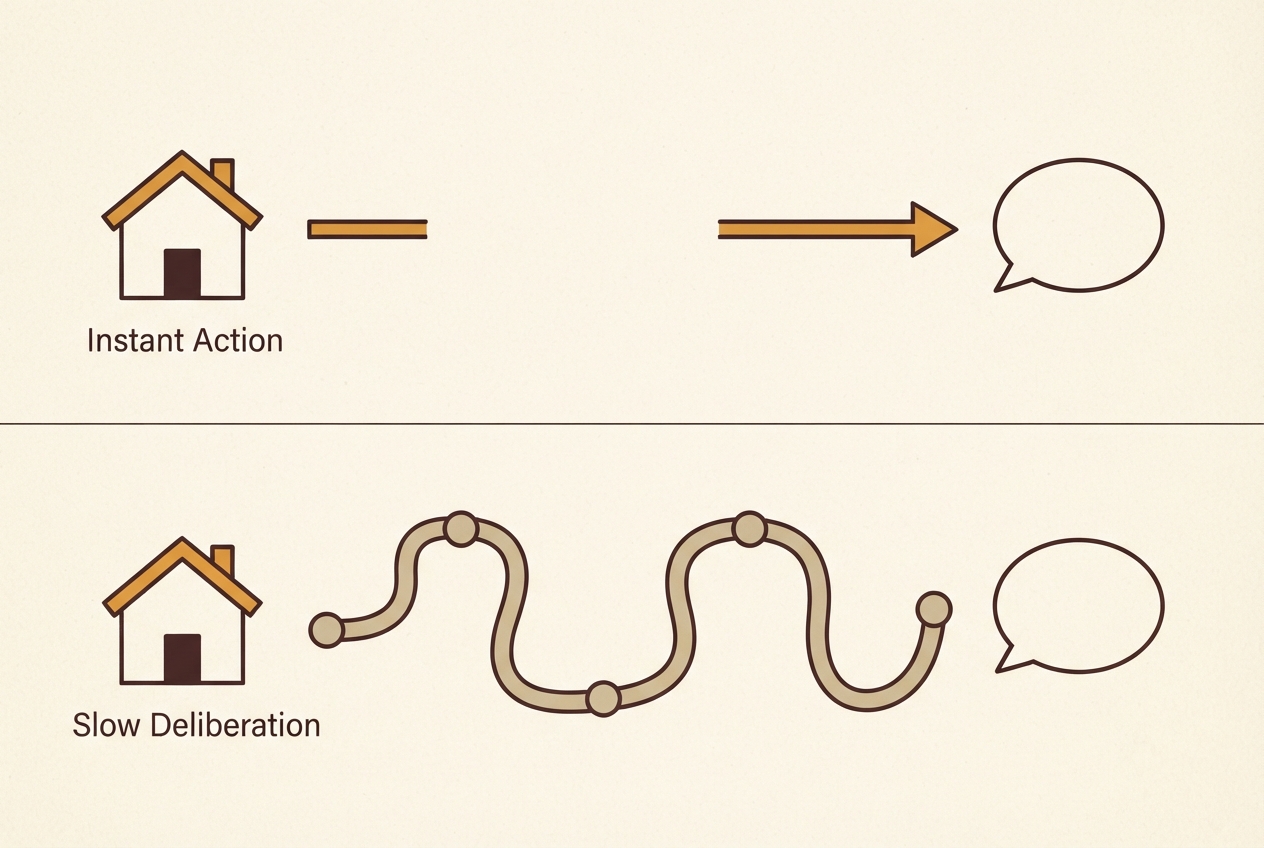
The mistake is treating plumbing as one market. It is two, and they need different work.
| Emergency | Planned | |
|---|---|---|
| Example | Burst pipe, no hot water, sewage backup | Water heater replacement, repipe, bathroom remodel |
| Deliberation | None | Days to weeks |
| What decides it | Who is named, who answers | Cost, comparison, credentials |
| What you need | Accurate hours, service area, price structure | Cost guides, comparison pages, reviews |
The emergency population is won with data accuracy. The planned population is won with content, a water heater cost page, a tankless-versus-tank comparison, a straight explanation of why a repipe costs what it costs.
Most plumbers under-invest in the second because the first feels more urgent. But planned work carries the better margin, faces a customer who will actually read, and is where the durable citations get earned.
The checklist
Week one, be assertable.
Real hours everywhere and identical. Explicit service-area list in text.
LocalBusiness schema with opening hours. Verified in Bing Webmaster Tools,
since that is how ChatGPT finds candidates.
Weeks two to four, be quotable. An emergency pricing page with your actual fee structure. A water heater replacement cost page. A tankless-versus-tank comparison. Each leading with the answer in the first sentence.
Ongoing, be corroborated. Ask for reviews that name the situation: "came out at 11pm for a burst pipe and quoted the call-out fee upfront." Engines quote language; generic five-star ratings give them nothing to quote.
FAQ
Why is my plumbing company not showing up for "emergency plumber near me"?
The most common cause is contradictory business data. If your website claims 24/7 service while your Google Business Profile lists weekday office hours, an answer engine cannot confidently assert you are open, so it names a business whose hours are unambiguous. Make hours, service area, and phone identical across every listing before touching anything else.
Should I list my emergency call-out fee publicly?
Yes. Cost questions are among the most reliably AI-answered queries, so a number will be given to your customer regardless, currently sourced from national aggregators rather than from you. Publishing your real call-out fee, hourly rate, and after-hours multiplier makes you the quotable source and pre-qualifies the caller.
What does an emergency plumber cost in 2026?
Published 2026 figures put after-hours call-out fees at roughly $150–$250 and hourly rates at about $100–$350, with typical emergency visits landing between $150 and $500. Complex jobs such as burst pipes or main line clogs commonly run $500 to $2,000. After-hours weeknight work is often around 1.5× standard rates, with weekends and holidays at 2–3×.
Do I need to be open 24/7 to win emergency searches?
No, but you must be accurate. Claiming 24-hour availability you cannot honour produces missed calls and bad reviews, which damages you more than a limited schedule would. State the hours you truly answer the phone, and state them identically everywhere.
Is Google Business Profile still the most important thing for plumbers?
It remains the primary source of the operational facts engines use to describe you, hours, service area, phone, reviews. Treat Bing Places as equally important rather than an afterthought, because ChatGPT discovers candidate businesses through Bing's infrastructure rather than Google's.
What about non-emergency plumbing work?
That is a different discipline entirely. Planned jobs like water heater replacement or repiping involve days of research, so they are won with cost pages, comparison pages, and reviews rather than with availability data. Most plumbers neglect this population even though it carries the better margin.
The short version
The 2am customer will not read anything you wrote. They will act on one sentence generated by a machine that needs to be confident about you before it names you. So make the facts true and identical everywhere, publish your real pricing structure, and only then write content, aimed at the planned-work customer, who is the one who actually reads.
Kaymak asks the questions your customers ask across ChatGPT, Google AI Overviews, and Perplexity, records who got named, and turns the gaps into a ranked to-do list. The live demo is free to explore, no signup.
Sources: HomeGuide, Emergency plumber cost, 2026 · Angi, Emergency plumber cost, 2026 data · Whitespark, The prevalence of AI Overviews in local search