
Open almost any med spa website and the homepage is a gallery. Before and after, before and after, lips and jawlines and smoothed foreheads, because that is what sells the treatment in a consultation room.
An answer engine reads none of it.
When someone asks ChatGPT or Google for the best med spa in their city, the model is working from text: your pages, your reviews, directory profiles, forum threads. The gallery that convinces a human in four seconds contributes nothing. Whatever your photos prove, they prove it only to people who already found you.
That is the central problem in this category, and it has an unusually clean solution, because the two things patients most want to know are things almost nobody in the industry writes down.
Your strongest evidence is unreadable
The instinct is to fix this by adding alt text to the gallery. That helps a little and it is worth doing, but it misunderstands the problem. A model deciding which clinic to name is not looking for evidence of results. It is looking for facts it can assert without risk.
In an aesthetics context, those facts are almost entirely about safety, qualification and price. A model will not vouch for your artistry. It will happily state that your injectors are registered nurses working under a named medical director, that you charge $14 a unit, and that you are open on Saturdays, because those are checkable and low-risk claims.
So the work is not to describe your results better. It is to write down the operational and clinical facts that your competitors leave implied.
The credential question has no national answer
Here is the structural gift in this category.
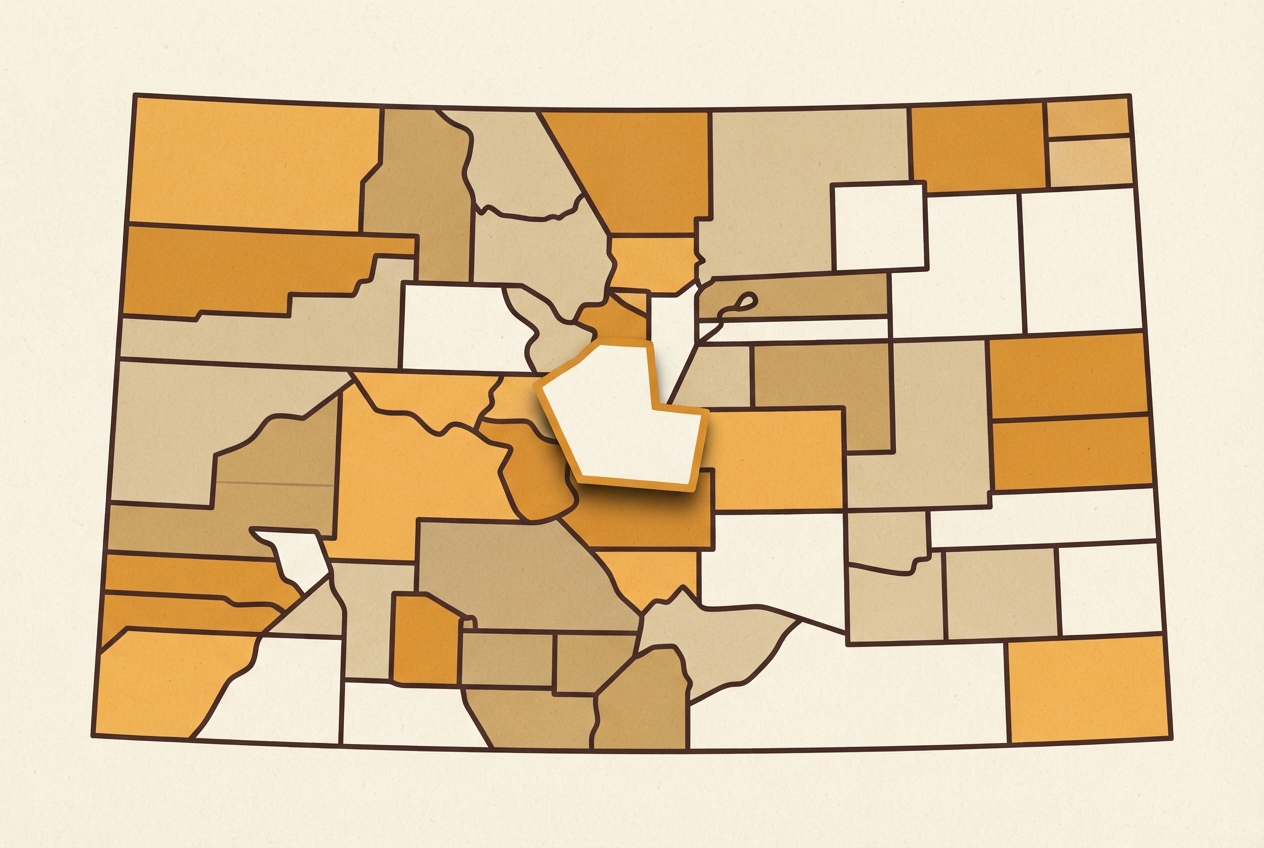
There is no federal standard for who may inject. Authority is set state by state, and the resulting patchwork is genuinely confusing:
- A group of states, including Alabama, Arkansas, Hawaii, Idaho, Iowa, Maryland, Minnesota, Missouri, Montana, Nebraska, New Jersey, North Dakota, Oklahoma, South Carolina, Utah, Washington and West Virginia, take a more restrictive line, limiting injection primarily to physicians.
- Others, including Alaska, Arizona, Colorado, Florida, Kansas, Kentucky, Michigan, Mississippi, South Dakota and Virginia, permit delegation under formal medical oversight.
- In California, registered nurses may inject under standardised procedures or physician orders, while aestheticians may not.
In effectively every state, injectables and energy-based devices require physician supervision through a medical director or a collaborative agreement. Texas closed its remaining med spa loophole with Senate Bill 378 in 2026, and state boards in New York, California, Texas and Florida have all reported increased disciplinary action against med spa owners and medical directors through 2024 to 2026.
Patients have noticed. "Who is actually injecting me" has become a real pre-booking question, and there is no national page that can answer it for a specific person in a specific state.
You can. A page that explains, in plain text, what your state requires and how your clinic satisfies it is a page a national aggregator structurally cannot write. It is also the exact shape of content an answer engine looks for: local, specific, checkable, and about safety.
The page to write
Call it whatever you like. It should state, as text on the page, not in a graphic:
- Your medical director, by name and licence type, and their actual role.
- Who performs each treatment, by credential. "Injections are performed by registered nurses and nurse practitioners under the supervision of Dr X" is a sentence a model can repeat.
- What your state requires, briefly, with a link to the board or statute.
- Your adverse-event protocol. What happens if something goes wrong, who you can reach, and how fast. Almost nobody publishes this and it is enormously reassuring.
- Products and devices used, by brand, and whether they are FDA-cleared for the indication.
This is not marketing copy. It reads like a disclosure document, and that is precisely why it works. Pages that read as reference material get treated as reference material.
Per-unit pricing is a gift, if you use it

Cost-plus-location queries are the most reliably AI-answered shape there is, and botulinum toxin pricing has a structural quirk that makes it unusually easy to own: it is priced per unit, and almost nobody explains what that means.
Published 2026 figures put the price at $10 to $25 per unit, most commonly $12 to $16, with major metros at $15 to $25 and rural markets nearer $8 to $13. Typical dosing runs 10 to 30 units for forehead lines, 10 to 15 units per side for crow's feet, and 40 to 60 units for a full upper face. Sessions commonly land between $300 and $1,000.
A prospective patient comparing a clinic at $11 a unit against one at $17 has no idea whether that is a bargain or a warning sign, because nobody has told them how many units they need. Clinics exploit that confusion, which is exactly why the clinic that resolves it gets trusted and quoted.
Publish your per-unit price, your typical unit ranges by area, and a worked example of what a full upper face actually costs at your clinic. Then explain why cheap per-unit pricing can cost more overall if the product is over-diluted or under-dosed. That paragraph is genuinely useful, unavailable elsewhere, and it converts.
What not to do
Aesthetics attracts marketing tactics that will damage your visibility as well as your licence:
- Do not publish outcome guarantees. Models in health-adjacent categories are conservative and treat unhedged claims as a reason to look elsewhere.
- Do not use patient photos or testimonials without explicit written consent. A signed general release is usually not sufficient, and the platform rules on Meta advertising are separate from and stricter than your own comfort level.
- Do not imply medical knowledge of the reader. Copy that addresses an assumed insecurity is both a Meta policy violation and a poor trust signal.
- Do not obscure who owns the clinic. Corporate practice of medicine rules are being enforced more actively, and vague ownership language reads badly to regulators and models alike.
FAQ
Why do before-and-after photos not help my med spa show up in AI search?
Because answer engines work from text. When a model decides which clinic to name, it draws on written content: your pages, reviews, directory profiles and third-party mentions. A gallery persuades a human who has already found you, but contributes almost nothing to being found. Descriptive alt text helps marginally; writing down your credentials, protocols and prices helps far more.
What should a med spa publish about its medical director?
Their name, licence type and actual role in the practice, along with who performs each treatment by credential and what your state requires. Since injection authority is set state by state with no federal standard, and every state requires physician supervision of injectables in some form, a plain-text explanation of how your clinic satisfies your state's rules is information no national site can provide.
How much does Botox cost per unit in 2026?
Published figures put it at $10 to $25 per unit, most commonly $12 to $16, with major metros running $15 to $25 and rural markets nearer $8 to $13. Typical dosing is 10 to 30 units for forehead lines, 10 to 15 per side for crow's feet, and 40 to 60 units for a full upper face, putting most sessions between $300 and $1,000.
Should a med spa publish its prices?
Yes, and with unit ranges rather than a bare per-unit figure. Cost questions are among the most reliably AI-answered queries, so a number reaches your patient regardless of whether it comes from you. Publishing per-unit price alongside typical unit counts and a worked example resolves a confusion the whole category trades on, which builds trust and makes the page quotable.
Who is legally allowed to inject Botox?
It depends entirely on the state. Some states restrict injection primarily to physicians, others permit registered nurses, nurse practitioners or physician assistants to inject under formal medical oversight, and in California aestheticians may not inject at all. Every state requires physician supervision of injectable practice in some form, and enforcement against unqualified injectors has increased notably through 2024 to 2026.
Are med spa regulations getting stricter?
Enforcement is intensifying. Texas closed its med spa loophole with Senate Bill 378 in 2026, and medical boards in New York, California, Texas and Florida have all reported increased disciplinary action against med spa owners and medical directors. Estheticians injecting without authority face criminal charges for practising medicine without a licence.
The short version
The gallery that sells your treatment in the consultation room does nothing to get you into the consultation room, because the systems now making recommendations read text and cannot see it.
What they can read is the material most med spas never publish: who your medical director is, who holds the needle and under what authority, what happens if something goes wrong, and what a treatment actually costs per unit and in total. None of that is marketing copy. All of it is checkable, local, and impossible for a national aggregator to write about your clinic.
Kaymak tracks whether ChatGPT, Google AI Overviews and Perplexity name your clinic when someone asks, including which competitors get named instead. The live demo is free, no signup. For the paid side, see Meta ads for clinics and Google Ads for clinics.
Sources: Med Spa Standards, who can inject Botox by state · American Academy of Aesthetics TX, Senate Bill 378 · Portrait, Botox cost per unit in 2026
Regulatory summaries are general and change frequently. Confirm your own obligations with your state medical board or a healthcare attorney before publishing claims about supervision or scope of practice.