Three numbers that every clinic owner should put next to each other.
Published 2026 benchmarks put dental search advertising at roughly $8 per click, a conversion rate around 10.7%, and a cost per lead near $73. Meanwhile the average cost to acquire an actual new dental patient sits between $150 and $400, rising past $400 in major metros.
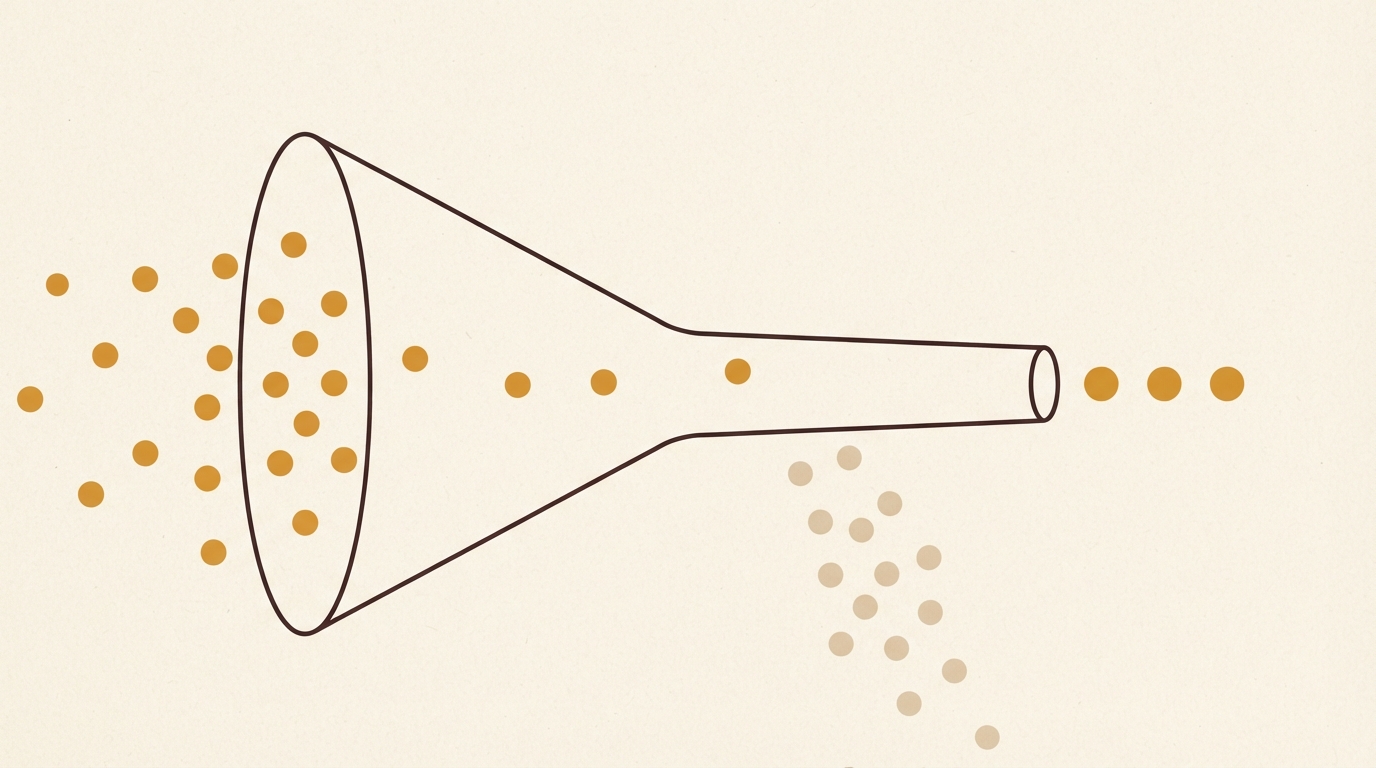
A lead costs $73. A patient costs $150 to $400. Everything in that gap happened after the click, in a part of the business most practices never instrument.
This is the thing agencies rarely lead with, because the gap is not usually in the ad account. It is in the phone.
Where the money actually leaks

A clinic's paid search funnel has four stages, and only the first two are visible in Google Ads:
- Impression to click. Your keywords, your copy, your budget.
- Click to lead. Your landing page, your form, your call button.
- Lead to booked appointment. Your front desk, your response time, your after-hours coverage.
- Booked to attended. Your reminder system.
Stages three and four are where a $73 lead becomes a $300 patient, and they are operational rather than digital. A practice with a 40% lead-to-booking rate pays roughly double per patient compared to one at 80%, on identical ad performance. No amount of keyword work closes that.
Two specifics worth auditing before you touch a bid:
- Who answers the phone during treatment hours? In most small practices the answer is nobody reliable, because the person is chairside. Paid clicks arriving at a voicemail are the single most expensive failure in clinic marketing.
- What happens to a form fill at 6pm on Friday? If the answer is Monday morning, you have paid for a lead that a competitor will convert over the weekend.
Instrument this before scaling spend. Call tracking with recorded outcomes, and a simple count of leads versus booked appointments, will tell you more about your cost per patient than any in-platform metric.
What a click actually costs by specialty

The spread across clinic types is wide enough that generic advice is useless. Dental sits among the highest-CPC industries in Google's entire auction at around $8, because per-patient lifetime value is high enough to justify aggressive bidding.
The important distinction is not specialty but procedure intent. Reported figures put referral-driven acquisition at $25 to $100 per patient, general dentistry paid social around $150 to $350, and implant-focused search campaigns between $800 and $2,000 per acquired patient.
An implant patient at $2,000 acquisition cost is still profitable against an implant lifetime value reported in the $8,000 to $40,000 range. A hygiene patient acquired at $2,000 is a disaster. The same account can contain both if you are not separating campaigns by procedure value.
Practical rule: one campaign per procedure tier, with budgets and target CPAs set from that procedure's actual value, not from a blended practice average. The blended average hides the campaign that is quietly losing money.
Performance Max is a poor default for a small clinic
Roughly 78% of Google Ads spend now runs through Smart Bidding or Performance Max, and advertisers using automated bidding report about 22% lower cost per conversion on average. Those averages are real, and they are also a trap for clinics, for three reasons:
Conversion volume. Automated bidding needs data. A clinic generating 15 to 30 leads a month gives the system very little to learn from, and it will spend real money exploring while it learns.
Brand cannibalisation. Performance Max will happily serve ads to people searching your practice name, patients you would have got for free, and report them as conversions. Your reported cost per acquisition improves while your actual new-patient count does not.
Conversion quality. If you count form fills as conversions, the system optimises for form fills, including the ones from people outside your service area or seeking treatments you do not offer. Feed it booked appointments instead and the behaviour changes completely.
For most single-location clinics, standard search campaigns on tightly-themed exact and phrase keywords, with brand terms excluded and offline conversions imported, will outperform Performance Max until volume justifies the switch.
Local Services Ads are worth a look
Google Local Services Ads now cover healthcare categories including dentists, plastic surgeons, urgent care and medical clinics, with reported cost per lead in the $50 to $150 range.
They differ from search ads in two useful ways: you pay per lead rather than per click, and they carry a Google verification badge that requires licence and insurance checks. For a category where patients are actively worried about credentials, that badge does real work.
They are not a replacement for search. LSAs occupy a different slot, offer far less control over targeting and messaging, and their lead quality varies. Run both and compare on cost per booked patient, not cost per lead.
The negative keywords every clinic needs
Health searches attract enormous volumes of non-commercial intent. Without negatives you will pay $8 a click to educate students and reassure the worried.
Add, at minimum: jobs, careers, salary, school, training, course,
assistant, hygienist, insurance card, free, medicaid (if you do not
accept it), symptoms, how to, home remedy, diy, pictures, and the names
of any procedures you do not perform.
Then review the search terms report weekly for the first month. Every clinic account I have seen has at least one surprising money pit in there.
What to measure
Stop reporting on cost per lead. It is the number that flatters the agency and tells the owner nothing.
Report four instead:
| Metric | Why it matters |
|---|---|
| Cost per booked appointment | Includes front-desk performance, which is where the gap lives |
| Cost per attended appointment | Includes no-shows, which are 15 to 20% at an average practice |
| Cost per patient by procedure tier | Stops implant economics from masking hygiene losses |
| Lead response time | The most improvable variable in the whole funnel |
Getting these into Google Ads means importing offline conversions from your practice management system. It is a half-day of setup and it changes what the bidding algorithm optimises toward, which is worth more than any bid adjustment.
FAQ
How much do Google Ads cost for a dental practice?
2026 benchmarks put dental among the most expensive categories in Google's auction, at roughly $8 per click with a conversion rate near 10.7% and a cost per lead around $73. Cost per acquired patient is considerably higher, typically $150 to $400 and above $400 in major metros, because not every lead books and not every booking attends.
Why is my cost per new patient so much higher than my cost per lead?
Because the gap is created after the click. Leads are lost between enquiry and booked appointment, usually to slow or missed phone response, and again between booking and attendance through no-shows. A practice converting 40% of leads to bookings pays roughly twice per patient what a practice at 80% pays, on identical ad performance.
Should a clinic use Performance Max?
Usually not as a default. Automated bidding needs conversion volume that most single-location clinics do not generate, it tends to absorb branded searches you would have won for free, and it optimises toward whatever you count as a conversion. Tightly-themed search campaigns with offline conversion imports are a better starting point.
Are Local Services Ads worth it for a medical or dental practice?
They are worth testing. Reported cost per lead runs $50 to $150, you pay per lead rather than per click, and the Google verification badge carries weight in a category where patients worry about credentials. Compare them against search on cost per booked patient rather than cost per lead.
What is a good return on ad spend for a clinic?
Judge it against lifetime value rather than first-visit revenue. General and preventive patient lifetime value is commonly put at $3,000 to $5,000 over five to seven years, so a $300 acquisition cost is a strong ratio. The widely used target is lifetime value at three to five times acquisition cost, measured per procedure tier rather than blended.
How much should a clinic budget monthly?
Work backwards from capacity rather than picking a figure. Decide how many new patients per month you can actually treat, multiply by a realistic cost per attended patient for your specialty and metro, and that is your budget. Spending beyond your chair capacity buys no-shows and frustration.
The short version
The ad account is rarely the constraint. At $8 a click and $73 a lead, a clinic paying $300 per patient is losing most of the difference at the front desk and in the reminder system.
Fix the phone, import offline conversions so the algorithm optimises toward booked patients rather than form fills, separate campaigns by procedure value, and add the negatives. Then worry about bidding strategy.
Kaymak covers the other side of discovery: whether ChatGPT, Google AI Overviews and Perplexity name your practice when someone asks for a recommendation, which is traffic no ad account can buy. The live demo is free, no signup, and the dentist guide is the place to start.
Sources: WordStream Google Ads benchmarks 2026 · Practice Growth Co, cost per lead by medical specialty · Dentx, cost per new dental patient
Benchmark figures are compiled from vendor and agency reporting rather than audited industry data, and vary widely by market. Treat them as orders of magnitude, not targets.