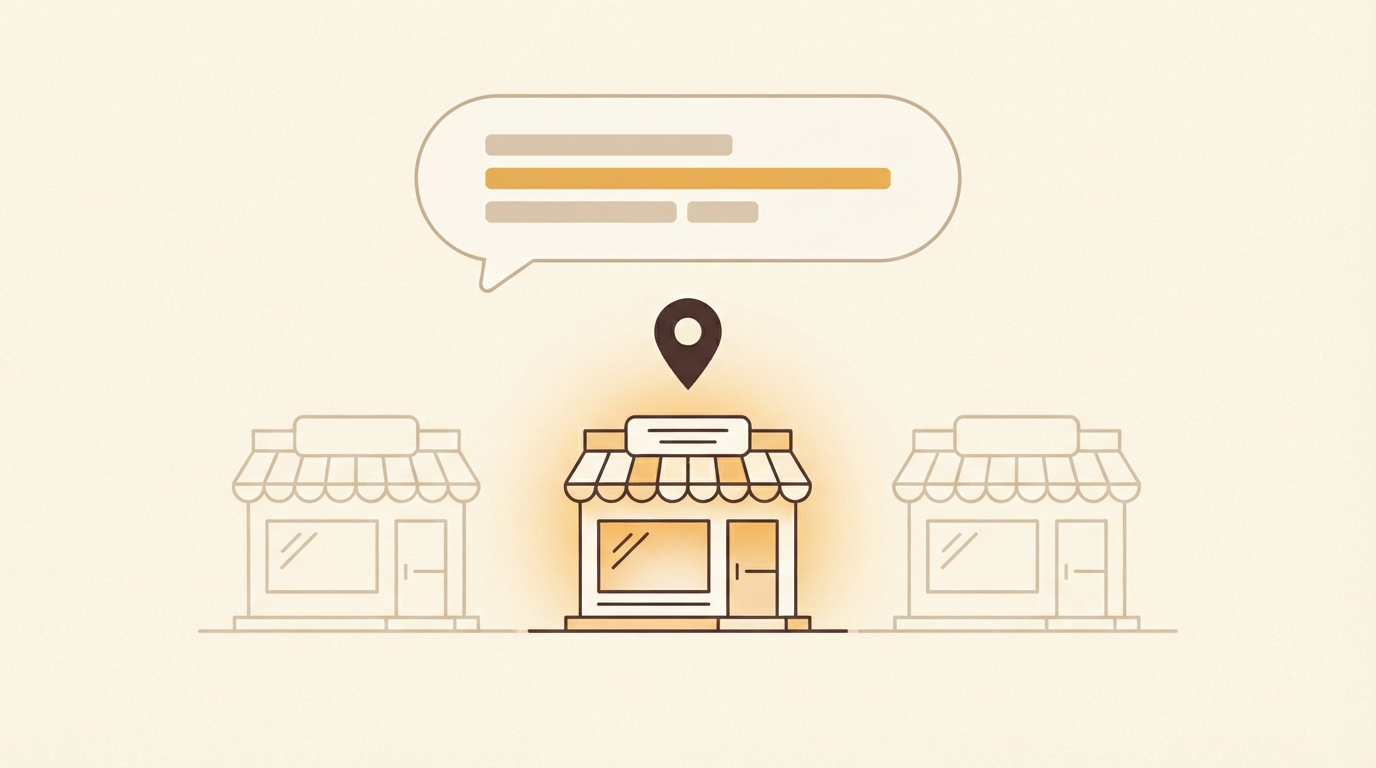
Ask Google "average cost of dental implants in Phoenix" and you will almost certainly get an AI Overview rather than a list of links. In a 2026 Whitespark study of 540 manual local queries across six industries, dentists among them, that kind of hybrid cost-plus-location question triggered an AI Overview 97% of the time.
That is the whole problem in one number. The question your highest-value patients ask is the question most likely to be answered before anyone reaches a website. Somebody gets named in that answer. This post is about how to make it you.
What actually changed
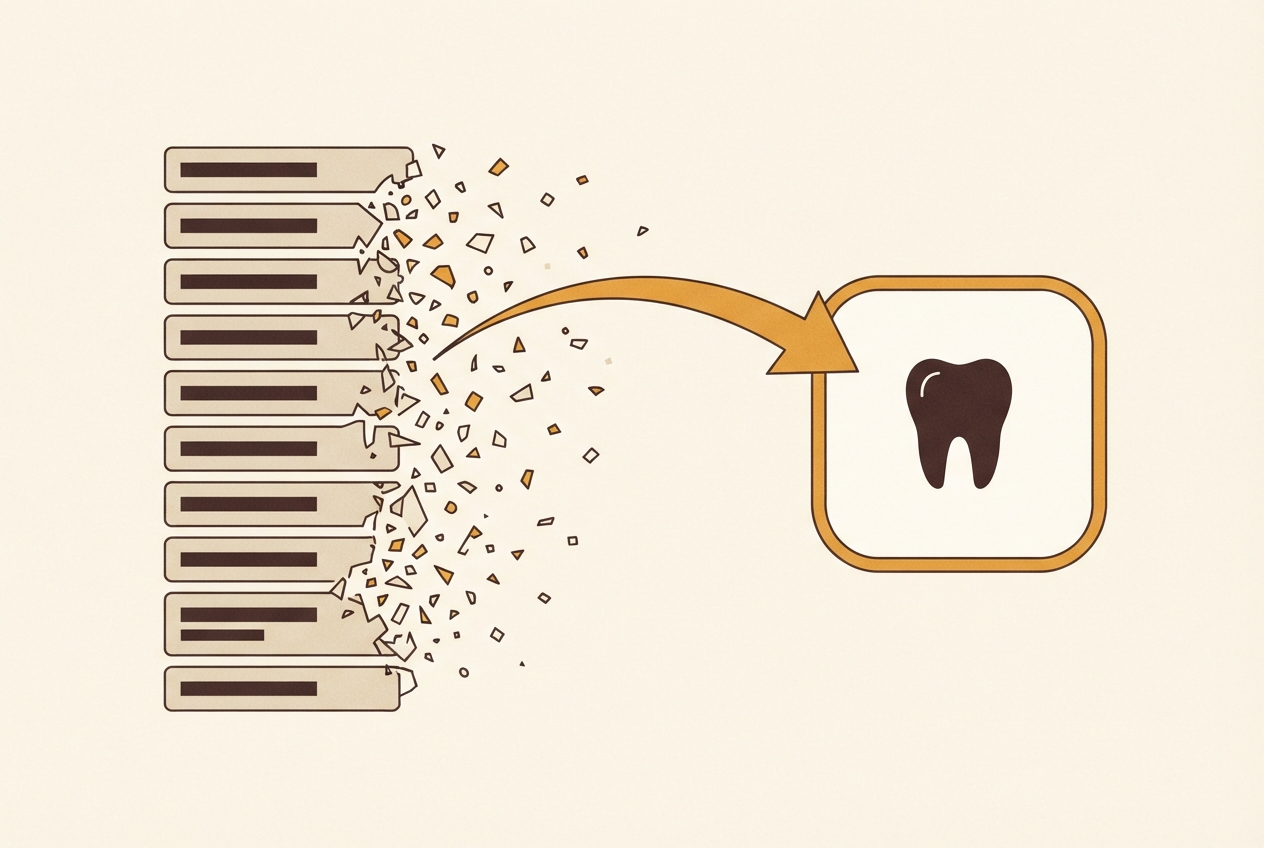
For twenty years, dental marketing meant getting into a list. Ten blue links, a map pack with three pins, and a patient who scrolled and compared. Position four was a real position. It still got seen.
An answer engine does not produce a list. It produces a paragraph naming one to three practices, and then it stops. There is no page two, no scrolling, and often no click at all. Whitespark found AI Overviews appearing on 68% of local searches against 39% for the traditional local pack, the AI answer is now the more common result.
Two things follow from that, and they are uncomfortable:
- The number of winning slots collapsed. Ten became roughly three.
- The AI is not reading your website. It is reading about you. It synthesizes reviews, directory profiles, forum threads, and third-party pages. Your site is one input among many, and rarely the loudest.
Intent decides everything, and dentistry is on the wrong side of it
The 68% headline hides the finding that matters more for a dental practice. AI Overview prevalence varies enormously by what kind of question is asked:
| Query type | Example | AI Overview appears |
|---|---|---|
| Simple local intent | "tacos san francisco" | 15% |
| Informational + local | "how long does an eye exam take near me" | 92% |
| Hybrid intent | "average cost of dental implants in Phoenix" | 97% |
Look at where dentistry actually lives. Almost nobody types "dentist Phoenix" and stops. They type "how much do dental implants cost", "does Invisalign hurt", "emergency dentist open now that takes Delta Dental", "is a root canal or an extraction better". Those are informational and hybrid queries, the two categories where the AI answers and the link list barely appears.
A restaurant can survive this shift on the map pack alone. A dental practice cannot. Your entire query mix sits in the 92–97% band.
One honest caveat: a larger Local Falcon analysis of roughly 60,000 queries across 4,423 businesses found a lower overall figure, 40.2%, because it included navigational searches (someone typing your practice name) where AI Overviews almost never appear. Both numbers are correct. They are measuring different questions. The point stands for the questions that bring you new patients.
The four things that decide whether AI names your practice
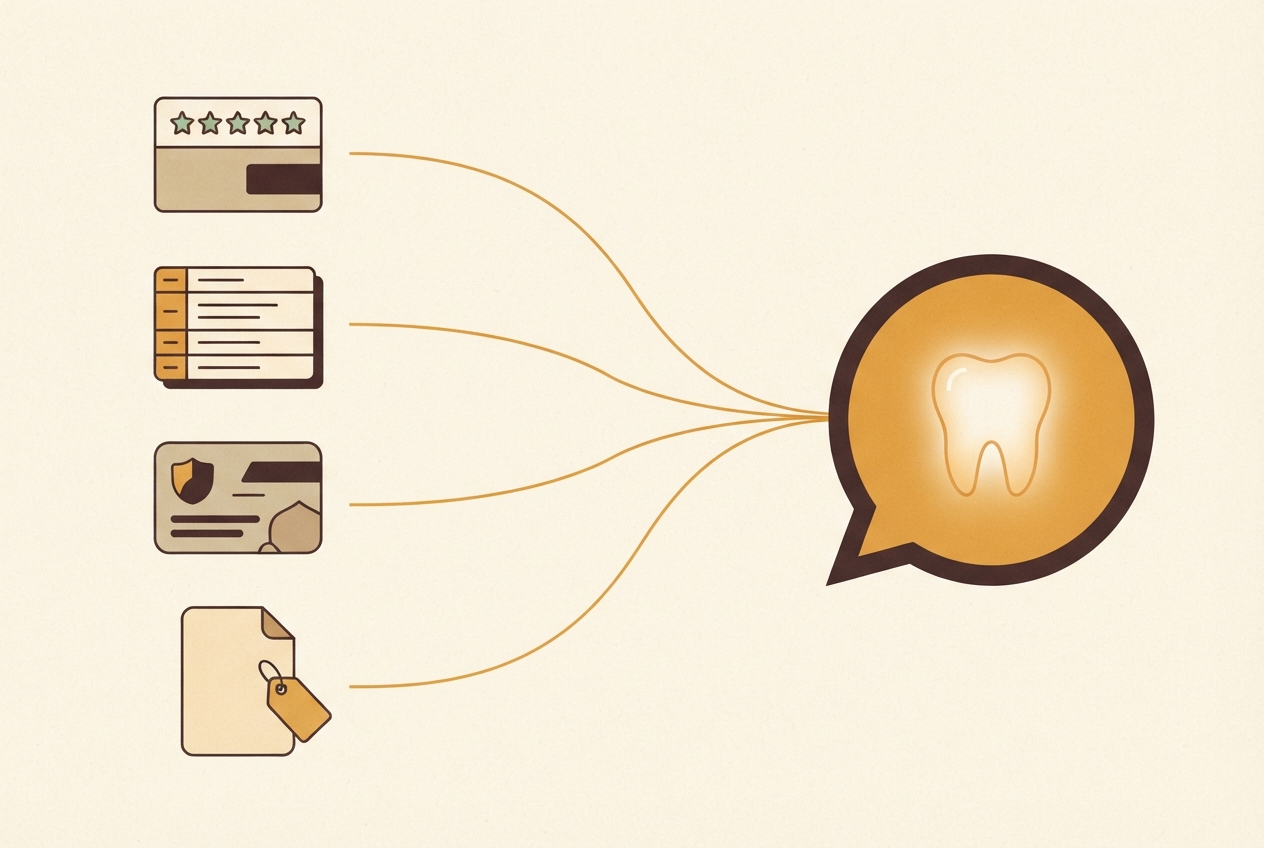
1. Reviews that say something specific
Answer engines quote reviewers, and they weight reviews containing concrete service language, procedure names, and geography far more heavily than generic praise. A model can do something with "came in on a Sunday for my broken crown and took my Cigna plan". It can do nothing with "Great office!"
A practice with 60 reviews that mention "gentle", "same-day crown", "sedation", and named insurance plans will be described more richly, and therefore recommended more often, than a practice with 300 five-star reviews and no text.
Do this: stop asking for reviews. Start asking for specific reviews. After a sedation appointment, ask the patient to mention that it was sedation. After an emergency visit, ask them to mention it was an emergency and that you fit them in same day.
2. Entity consistency across the web
When an engine finds your name, address, and phone identical across your Google Business Profile, your website, Yelp, Healthgrades, and your insurance directories, it becomes confident you are a real, stable entity. When it finds fifteen listings that disagree, confidence drops, and a model that is unsure about you simply names someone else.
This is unglamorous and it is the single most common thing wrong with a dental practice's AI visibility. Old suite numbers. A tracking phone number on one directory and the real one on another. The associate's name on a profile they left four years ago.
3. Pages shaped like the question
The AI needs a source it can attribute. A page titled "How much do dental implants cost in Phoenix?" that answers with a real range in the first paragraph is quotable. A services page headlined "Quality Dentistry You Can Trust" is not.
4. Corroboration from somewhere that isn't you
Reddit alone accounts for roughly 21% of citations in Google's AI Overviews, with YouTube close behind at 18.8%. Local news, dental society directories, and community publications play the same role: they turn your claims into facts the model is willing to repeat.
You cannot manufacture this, and you should not try to. But you can be the practice that actually answers questions in a local subreddit, that has a real profile on the state dental association site, and that gets quoted when the local paper writes about fluoride.
The three pages every practice should own
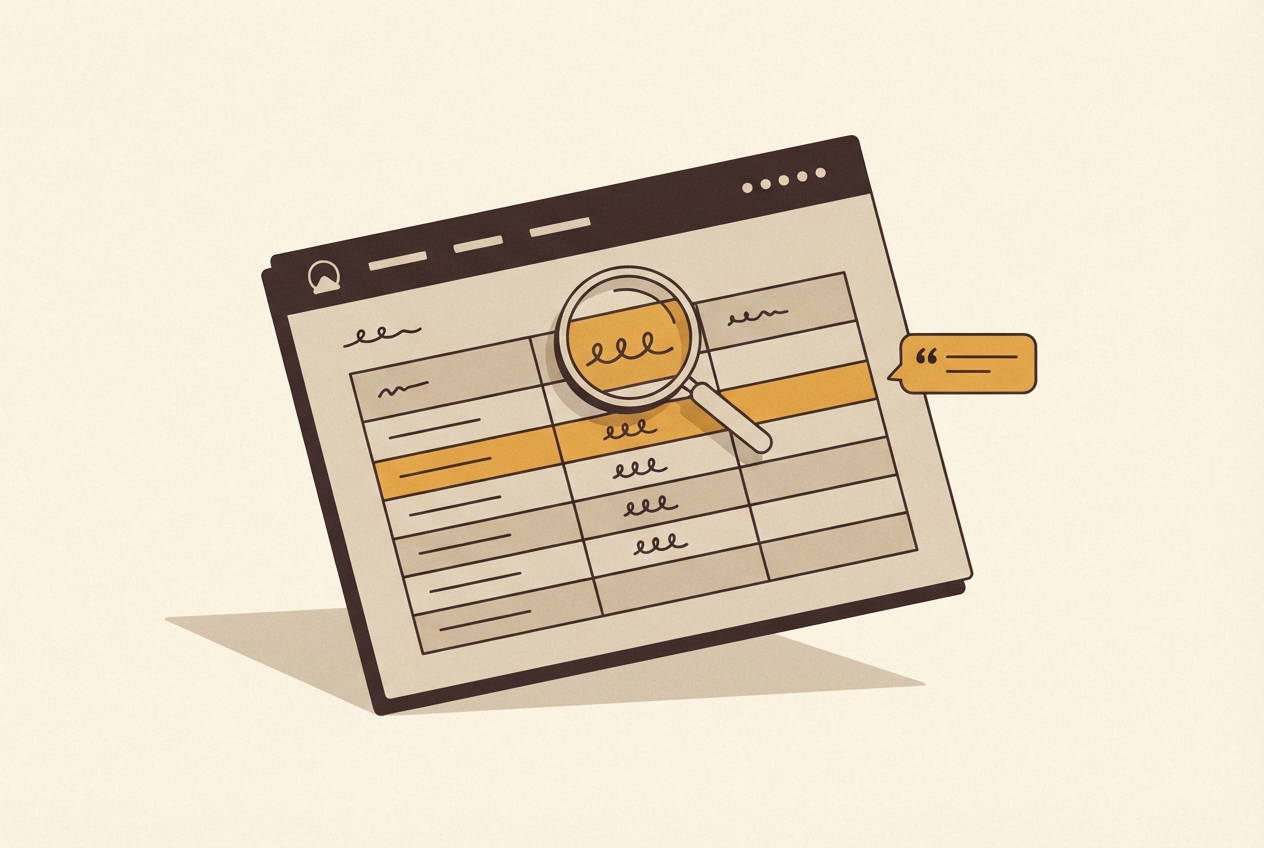
Most dental sites have a home page, a services list, and a contact form. That is a brochure. Here are the three pages that actually get quoted:
The insurance page. "Does this dentist take my insurance" is one of the most common questions asked before booking, and one of the least often answered in plain text. List every plan you accept, by name, as text on the page, not in an image, not behind a form. This is the highest-leverage page in dentistry and most practices do not have one.
The cost page. One page per high-value procedure, implants, Invisalign, crowns, veneers, each with a real number range for your city and an honest explanation of what moves the price. "Call for a quote" is invisible to an answer engine. A range of $3,800–$5,500 with three bullet points explaining the variance is a citation waiting to happen.
The emergency page. State your actual availability, your triage process, and what a patient should do in the next ten minutes. Emergency queries carry the highest intent in the entire category, someone in pain at 9pm is not comparison shopping, they are booking whoever the answer names.
How to check where you stand, in twenty minutes
Before spending anything, do this manually:
- Write down the ten questions a patient would type before choosing you. Not keywords, questions. Include at least three cost questions, one insurance question, and one emergency question.
- Ask each one in ChatGPT, Google, and Perplexity, with your city named.
- Write down every practice mentioned, and in what order.
You will end up with two things: an honest picture of your visibility, and your real competitive set, which is often not the practices you thought you were competing with.
That list is the roadmap. The gap between the practices being named and yours is almost always explained by the four factors above.
FAQ
How long does AEO take to work for a dental practice?
Longer than an ad, faster than traditional SEO. Directory and profile corrections propagate in days to weeks. New review language starts influencing how you are described within a few weeks of volume arriving. A new cost or insurance page needs to be crawled and then earn enough corroboration to be trusted, call it a month or two before it reliably shows up in answers.
Why does the AI name a different practice every time I ask?
Because these systems are probabilistic, and the answer is regenerated each time rather than looked up in a ranking table. Two patients in the same city can get different practices. That is not a fault in your marketing. It is how the technology works, and it is exactly why sampling the same questions repeatedly tells you far more than looking yourself up once.
Do I need to know SEO to do this?
No. The underlying signals overlap heavily with local SEO, reviews, consistent listings, useful pages, but the work is concrete and non-technical: ask for reviews that mention specific procedures, fix the listings that disagree with each other, and publish the insurance, cost, and emergency pages you probably do not have yet.
Is this different from ranking on Google?
Yes, in one decisive way. Google's link list gave you ten slots, so ranking fourth still won you traffic. An AI answer names one to three businesses and stops. You are either in the paragraph or you are absent. There is no consolation position.
Which AI engines should a dental practice care about?
Google AI Overviews first, because they now appear on the majority of local searches and reach patients who never deliberately opened an AI tool. ChatGPT second, on sheer usage. Perplexity third, smaller, but its users skew toward research-heavy decisions, which describes anyone pricing implants or orthodontics.
Can I just pay for ads instead?
You can, and many practices should do both. But ads and AI answers are not substitutes: an ad reaches someone who is already searching, while the AI answer is what a patient gets when they ask for a recommendation and never see a results page at all. Ads stop the day you stop paying; a well-corroborated entity keeps being named.
The short version
Your patients are asking questions in the exact category where AI answers instead of listing. Being in the answer comes down to reviews that say specific things, listings that agree with each other, pages shaped like the questions patients ask, and third parties who corroborate you.
None of that requires an agency or a rebrand. It requires knowing what the AI currently says about your practice, which is the part almost nobody has.
Kaymak tracks exactly this: it asks the questions your patients ask across ChatGPT, Google AI Overviews, and Perplexity, records who got named and why, and turns the difference into a ranked to-do list. The live demo is free to explore, no signup.
Sources: Whitespark, The prevalence of AI Overviews in local search · Search Engine Journal, AI Overviews now answer most local searches · Local Falcon, AI Overviews visibility whitepaper